Greek Mythology Coloring Pages
Odysseus Coloring Pages
Welcome to our Odysseus coloring pages section.
Odysseus, the legendary Greek hero, is renowned for his intelligence, cunning, and adventurous spirit. As the King of Ithaca and a key figure in Homer’s epic poems "The Iliad" and "The Odyssey," Odysseus is celebrated for his role in the Trojan War and his perilous journey home. Known for his clever ideas, such as the famed Trojan Horse, he is often depicted as a wise and resourceful, but prideful, leader. His ten-year voyage back to Ithaca is filled with encounters with mythical creatures, gods, and daunting challenges, showcasing his resilience and ingenuity.
Odysseus has been making a bit of a comeback lately in movies like The Odyssey with Matt Damon and the TikTok series, "Epic the Musical" so I've decided to add a few extra coloring pages to the existing section.
Tap any image to open the full-size printable, then download or print it.
Before the war, Odysseus was a happy young king with a clever wife and a brand new baby boy named Telemachus. Ithaca was small and rocky, but it was home. It wouldn't be long before the call to war pulled him away from all of it.

Odysseus, young king of Ithaca, left his wife and newborn son behind and set sail with his men to join the war against Troy. Helen, wife of the Greek king Menelaus, had been taken by the Trojan prince Paris, and the whole of Greece rallied to bring her back.

It was Odysseus' idea to build a Trojan horse as a way to finally break into Troy. Ten years of fighting and nothing had worked, so this time the plan wasn't strength, it was patience. While the "gift" got wheeled through the gates, the rest of the fleet pulled back and pretended to sail for home, letting the Trojans believe the war was finally over.

Odysseus and a small group of his best men climbed inside the wooden horse and waited silently. It was cramped and dark.

The Trojans, thinking the Greeks had finally given up and sailed home, dragged the horse through their own gates as a trophy. That night, once the city had settled in to celebrate, Odysseus and his men slipped out into the city.
Once the gates of Troy were open, Odysseus climbed the walls and lit the signal fire. The Greek fleet had been waiting in the dark just offshore, and the flame told them it was time to attack.

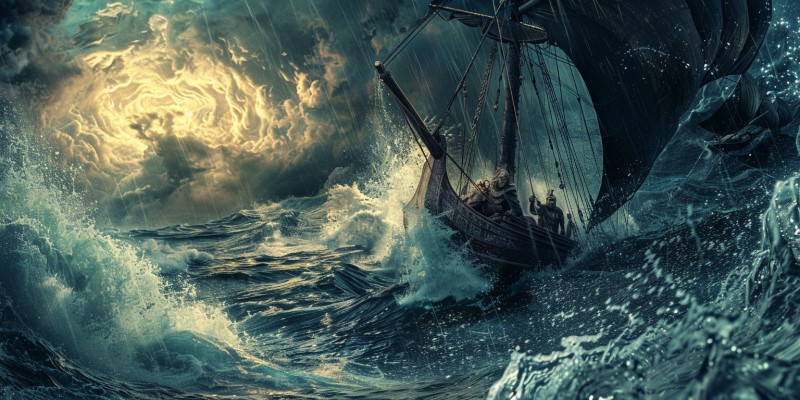
After Troy fell, the Greek leaders argued about when to sail home. Agamemnon, the overall commander, wanted to stay and make sacrifices first; Menelaus wanted to leave right away. Odysseus's fleet initially sailed with Menelaus, but then turned back to side with Agamemnon, splitting the Greeks into separate groups. Athena was already furious with the Greeks over how they'd behaved sacking Troy, and she sent a storm that scattered the fleets from each other entirely.

Not long after leaving Troy, Odysseus and his men landed on the shore of the Lotus-Eaters, a people who lived on the fruit and flowers of the lotus plant.

A few of his men ate it and lost all desire to leave, forgetting home entirely and wanting nothing more than to stay and eat lotus forever. Odysseus had to drag them back to the ships by force and get his fleet moving again before more of his men fell under the same spell.

Odysseus and his men landed on an island because they were low on supplies.

They found a cave, tucked into the hillside, filled with cheese, milk, and pens of sheep, clear signs that whoever lived there wasn't small. Odysseus's men wanted to grab what they could and leave. Odysseus wanted to wait and meet whoever called this cave home. It was a decision he'd come to regret.
Odysseus gave Polyphemus some very strong wine, way stronger than he was used to. The Cyclops drank cup after cup and liked it so much he asked Odysseus his name.

"Nobody," Odysseus told him. That little lie would turn out to matter a lot. Soon enough, the wine had done its job and Polyphemus fell asleep.
While Polyphemus slept, Odysseus and his men drove a sharpened stick into his one eye. He woke up roaring and blind, and shouted for help from the other Cyclopes nearby.

When they asked who'd hurt him, all he could yell was "Nobody!" So his neighbors just shrugged and went back to bed.
Blind now, Polyphemus guarded the cave entrance by feel, checking each sheep as it left.

Odysseus and his crew snuck out, hidden amongst the sheep.
Once they were safely out of the cave, Odysseus couldn't help himself, he shouted his real name back at Polyphemus.

It felt like a win in the moment to Odysseus, but it was a prideful mistake. Polyphemus was Poseidon's son, and the sea god doesn't forget when someone hurts his family.
When Polyphemus called out to him, Poseidon heard every word, his own son, blinded and humiliated by a man proud enough to shout his own name across the water. Poseidon didn't hold back. He made sure Odysseus's trip home would be anything but easy, throwing storms in his path, wrecking his ships, and dragging out a simple sail home into ten long years at sea.

Poseidon's storms had already tossed Odysseus and his men off course again and again, so when they landed on the floating island of Aeolus, keeper of the winds, it felt like a lucky break.

Aeolus liked Odysseus and wanted to help him get home. He gave him a leather bag holding captive every wind except the one gentle breeze needed to carry the ship straight to Ithaca.
With Ithaca finally in sight, Odysseus let himself rest for the first time in weeks. His men, curious about the bag he'd been guarding so closely, assumed it was hiding treasure he didn't want to share. While he slept, they opened it. Every wind Aeolus had trapped inside came roaring out at once.

Well that was silly! Why did they do that?
In the myth, Odysseus kept the bag's true contents secret from his crew the whole voyage, he never told them what was actually inside. All they knew was that their captain had gotten a mysterious gift from a god and had guarded it jealously the entire trip, never letting anyone near it. By the time Ithaca came into view, the men had convinced themselves it had to be gold or treasure that Odysseus was planning to keep for himself instead of sharing.
The winds Aeolus had sealed away tore loose all together, slamming into the ship from every direction with no order or mercy.

Instead of gliding into Ithaca's harbor, Odysseus and his men were blown backward, all the way to the island they'd just left.
The Anemoi were the Greek gods of the winds, each one ruling a different direction: Boreas of the north, Notus of the south, Eurus of the east, and Zephyrus of the west. Aeolus didn't rule them so much as keep them contained, letting them loose only when needed.

It was their combined fury, all released at once, that sent Odysseus's ship crashing back the way it came.
Blown off course after the disaster with the winds, Odysseus and his men landed on an island ruled by Circe, a powerful sorceress known for turning men into animals. Odysseus sent part of his crew ahead to scout her house, staying back with the rest of the ship himself.

Of course, Odysseus and his men were unaware of the danger Circe posed.
Circe welcomed the scouting party in with food and drink, but the both were laced with one of her potions. As soon as they ate, the men turned into pigs right there in her hall.

Only one man had stayed outside and escaped to warn Odysseus what had happened. Odysseus rushed to the cabin to see for himself.
On his way to rescue his men from Circe, Odysseus was stopped by Hermes, the messenger god. Hermes handed him a special herb called moly and told him it would protect him from Circe's magic. He also warned him to draw his sword when she tried to trick him.

Odysseus marched straight into Circe's house to get his men back, protected from her magic by the herbs the god Hermes had given him.

When her potion didn't work on him, Circe was so startled she gave in, agreeing to turn his men back if he'd put down his sword. Odysseus lowered his blade, and got his men back.
Circe told Odysseus he needed to visit the Underworld before he could find his way home, so he sailed to its edge and did as she instructed. He dug a pit, poured out offerings of honey, wine, and blood, and waited as the spirits of the dead gathered around, drawn by the smell of the sacrifice.

Among the spirits was Tiresias, a blind prophet even in death, the one soul Odysseus had actually come to find.

Tiresias warned him about the dangers still ahead, including Poseidon's anger and the temptation to harm the cattle of the sun god. He also warned Odysseus that his men wouldn't all survive to see home.
Back at sea, Odysseus faced the strait between Scylla and Charybdis, with no way through that didn't cost him something.

Scylla lived in the cliffs above, six-headed and always hungry, waiting for ships foolish enough to pass too close.
Odysseus chose to sail nearer to Scylla's rocks than to the whirlpool on the other side. As her heads struck down from above, her tentacles rose up out of the sea at the same time, grabbing sailors right off the deck from below.

Six men were gone in moments, snatched from two directions at once, and there was nothing anyone could do but watch.
Before the strait, Odysseus had his men plug their ears with wax so they couldn't hear the Sirens' song, known to lure sailors to their deaths. He wanted to hear it himself, so he had his men tie him tightly to the mast and ordered them not to untie him no matter what he said or did. The song was as beautiful and maddening as promised, and Odysseus strained against the ropes the whole way past.

After Poseidon destroyed his raft in one last act of fury, Odysseus washed up half-drowned on the shores of Calypso's island. She found him there, exhausted and barely alive, and took him in.

Calypso cared for Odysseus and eventually offered him something far greater than food or shelter: immortality, if he'd stay with her forever. He missed his home and his family too much to accept, even with eternal life on the table.

Calypso finally released him, and Odysseus built a raft and set out again, alone this time. Poseidon wasn't finished with him yet, and a storm tore the raft apart, leaving Odysseus clinging to broken wood and fighting just to stay afloat.

With her husband gone for twenty years and suitors crowding the palace, Penelope counselled Telemachus to stay patient and careful rather than confront them outright. She reminded him to keep his temper in check and trust that his father might still find his way home, even after all this time.

To stall the suitors pressing her to remarry, Penelope told them she'd choose once she finished weaving a burial shroud for Odysseus's elderly father.

Every day she wove in front of them, and every night she secretly unravelled her own work, buying herself years of delay.
Twenty years after he'd first left as a young king, Odysseus finally washed ashore on his own island.

When he finally set foot on his own shores again, Odysseus wasn't the young king who'd sailed away. His face was weathered, his hands scarred, his eyes carrying everything he'd seen.

He was older, scarred, and unrecognizable, carrying every year of the war and the journey home on his face.
When Odysseus finally washed up on his own island, he didn't even recognize it, Athena had disguised the landscape so he wouldn't be spotted before he was ready. She appeared to him there, revealing who she was and where he'd truly landed. Together they made a plan: she'd disguise him as an old beggar so he could slip back into his own home unnoticed, size up the suitors, and figure out who in his household had stayed loyal before making his move.

Disguised as a beggar so no one would know he'd returned, Odysseus walked past guards, servants, even his own family without being noticed. But lying in the dirt by the gate was Argos, the dog he'd raised as a puppy before he ever left for Troy. Old now, flea-bitten, mostly ignored by everyone else, Argos lifted his head, recognized his master after twenty years, and thumped his tail. Then he closed his eyes and died, having waited just long enough to see Odysseus come home.


Still disguised as a beggar, Odysseus asked to try his hand at a contest Penelope had set: string her husband's old bow and shoot an arrow through a row of axe heads. Every suitor before him had failed, unable to even bend the bow. Odysseus strung it with ease, and the room fell silent in shock.
The moment the bow was strung, Odysseus dropped his disguise, turned the weapon on the suitors, and began fighting back with Telemachus and his loyal men at his side. Years of arrogance and abuse in his own home ended in a single violent stand.

Even after the suitors were dealt with, Penelope wasn't fully convinced the man in front of her was really her husband. She tested him with a detail only Odysseus would know, about their bed built around a living olive tree, and when he answered it correctly, twenty years of doubt finally broke into tears and relief.

When the fight was over, Odysseus finally got to hug the son he'd left behind as a baby. Telemachus was a grown man now, and the two of them had fought side by side to win back their home. Penelope stood watching from a distance. She wanted to believe it was really him, but after twenty years of waiting, she wasn't ready to run into his arms just yet.

Other Sections you might like:

Hector – Trojan Hero
Hector was the bravest warrior of Troy in The Iliad, the epic that tells the story of the Trojan War. He defended his city and family against the invading Greeks and faced legendary heroes like Achilles. Though he doesn’t appear in The Odyssey’s main adventures, his courage and the events of the Trojan War set the stage for Odysseus’ long journey home.
Athena guided Odysseus throughout the tale, but her help was never unconditional. She'd turned away from him once already, after his pride cost him at the Cyclops's cave, and she'd let the Scylla and Charybdis strait play out without stepping in to soften it. Even a goddess on his side wasn't the same as a goddess who'd save him from every consequence... some lessons he had to learn (and survive) on his own.