Famous Scientists Coloring Pages
Welcome to my Famous Scientists coloring pages section.
The word “scientist” wasn’t invented until 1833, but people were asking big questions about nature long before that. Aristotle studied octopuses in ancient Greece, Galileo pointed a telescope at Jupiter, and Marie Curie won Nobel Prizes in two different sciences.
Scientists
Hippocrates

In ancient Greece, many people believed illness was a punishment from the gods. Hippocrates, a doctor from the island of Kos, looked for natural causes instead. He and the doctors around him watched their patients closely and wrote down how a sickness started, changed and ended.
That habit of careful notes is still the heart of medicine. The Hippocratic Oath, a promise to help patients and never harm them, is named after him.
Aristotle

Aristotle may be the first person to study animals in a systematic way. He described hundreds of kinds, and he spent time by the sea on the island of Lesbos watching marine life. He noticed that dolphins breathe air and feed their babies milk, which set them apart from fish.
He got some things wrong, like the idea that heavy objects fall faster than light ones. It took almost 2,000 years and a man named Galileo to prove otherwise.
Archimedes
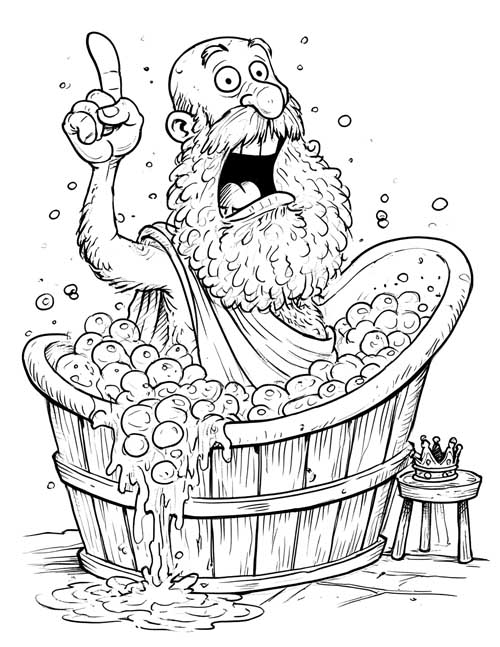
Archimedes lived in Syracuse, a Greek city on the island of Sicily, more than 2,200 years ago. He's best known for a story about a king's crown. The king suspected that the crown maker had mixed cheap metal into the gold, and Archimedes found a way to test it without damaging the crown. According to the story the idea hit him in the bath, and he ran out shouting "Eureka!", which means "I've found it!"
The tale may be a legend, but his discoveries are real. He worked out that a floating object pushes aside its own weight in water, which is why a heavy ship can float, and he explained how levers and pulleys let a small push lift a heavy load.
Nicolaus Copernicus
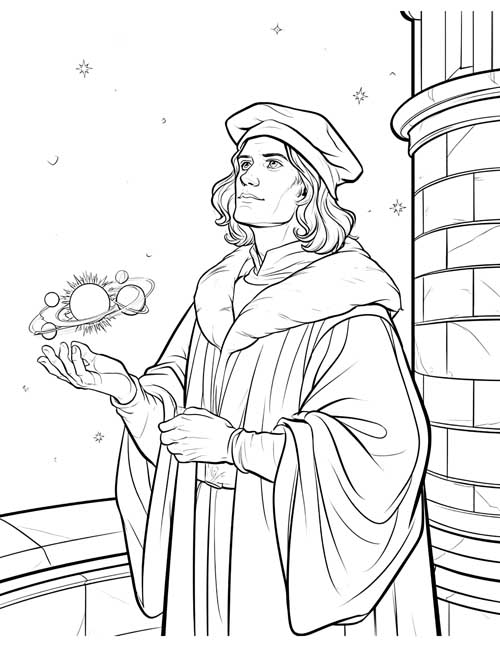
Copernicus was a Polish astronomer who lived from 1473 to 1543. Most people in his day believed the Sun, Moon and planets circled the Earth, but after years of watching the sky he decided that the Earth is a planet that circles the Sun.
He also realized that the Earth spins once a day, which is why the Sun seems to rise and set. His book about the idea was published in 1543, the year he died, and it started a big change in how people understood the sky.
Galileo Galilei

In 1609 Galileo built a much better telescope than the ones that existed, and he aimed it at the sky. He saw mountains and craters on the Moon, spots on the Sun and four small moons circling Jupiter. Those moons, Io, Europa, Ganymede and Callisto, are still called the Galilean moons.
He also tested how things fall by rolling balls down ramps, and he found that they speed up at the same rate no matter how heavy they are. The story that he dropped balls from the Leaning Tower of Pisa is probably just a legend.
History of Space Travel coloring pages
Isaac Newton

Newton worked out that the force that pulls an apple to the ground is the same force that keeps the Moon circling the Earth. In 1687 he published his three laws of motion and his law of gravity in a book called the Principia, and it explained how everything from cannonballs to planets moves.
He also used a glass prism to show that white light is made of all the colors of the rainbow, and he built an early reflecting telescope that used a mirror instead of a lens.
Charles Darwin

Darwin spent almost five years sailing around the world on the HMS Beagle, collecting fossils, beetles, birds and plants. On the Galápagos Islands he noticed that animals like tortoises and finches differed from island to island, and he started to wonder why.
His answer was natural selection: creatures with traits that help them survive are more likely to have babies, so those traits get passed on. He published the idea in On the Origin of Species in 1859, more than twenty years after he first began thinking about it.
Ada Lovelace
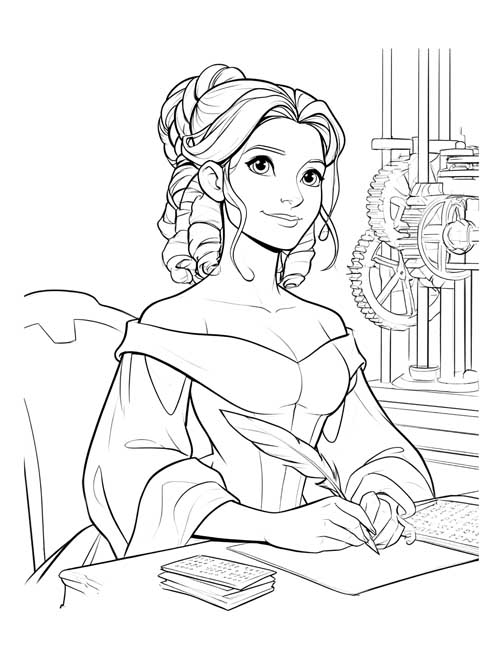
Ada Lovelace was born in England in 1815, the daughter of the poet Lord Byron, and she loved mathematics. She worked with Charles Babbage, who designed a mechanical computer called the Analytical Engine, and in 1843 she wrote notes for it that included a step-by-step method for solving a math problem.
That method is often called the first computer program, even though the machine was never finished. She also guessed that such a machine could work with music and pictures as well as numbers, which is just what computers do today.
Louis Pasteur
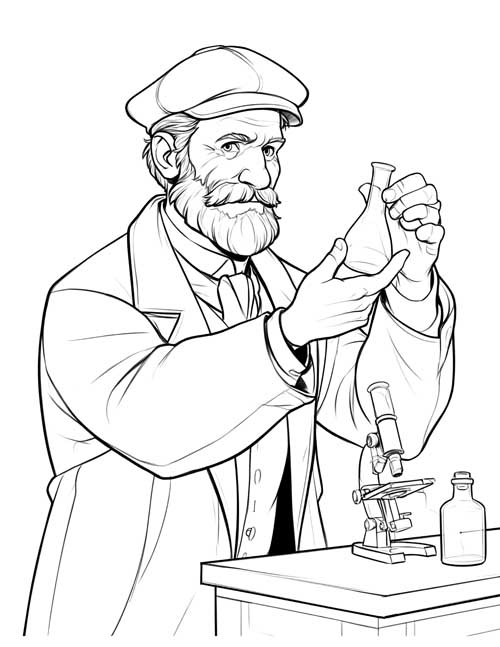
Louis Pasteur was a French chemist who figured out why milk and wine spoil: tiny living things such as bacteria and yeast grow in them. He found that heating them gently kills the germs, and the process is named pasteurization after him.
He also helped show that germs cause many diseases, which changed how doctors worked, and he developed vaccines, including one for rabies in 1885.
Nikola Tesla
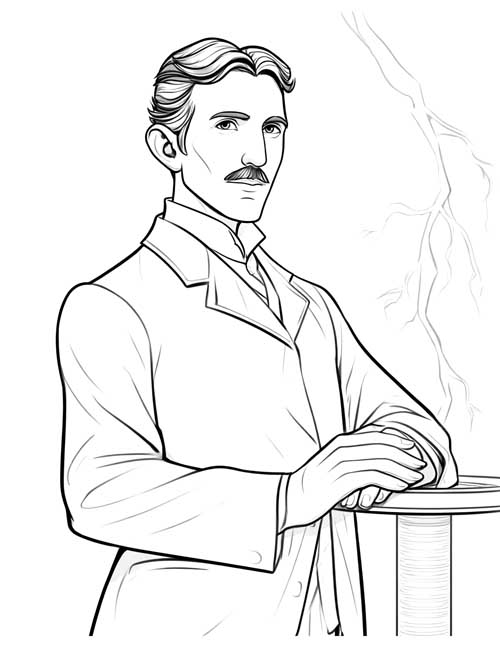
Nikola Tesla was born in 1856 in what is now Croatia and moved to the United States in 1884. He designed motors and equipment that run on alternating current, which can be sent over long distances, and it became the way electricity reaches our homes.
He built the Tesla coil, which makes spectacular electric sparks, and his alternating current designs helped power the Niagara Falls hydroelectric plant in 1895. The tesla, the unit for the strength of a magnetic field, is named after him.
Marie Curie

Marie Curie studied the mysterious rays that some materials give off, and she gave the effect a name: radioactivity. She and her husband, Pierre, found two new elements, polonium, which she named after her homeland of Poland, and radium.
She won the Nobel Prize in Physics in 1903 and the Nobel Prize in Chemistry in 1911. During World War I she helped build mobile X-ray machines that were driven to the front lines to help doctors treat wounded soldiers.
Albert Einstein

In 1905, while working in a patent office in Switzerland, Einstein published several papers that changed physics. They included his theory of special relativity and the equation E=mc², which shows that mass and energy are two forms of the same thing.
In 1915 he explained gravity as the bending of space and time. When astronomers watched a solar eclipse in 1919 and saw starlight bend around the Sun just as he had predicted, he became famous around the world. He won the Nobel Prize in 1921 for a different discovery, the photoelectric effect.
Alexander Fleming
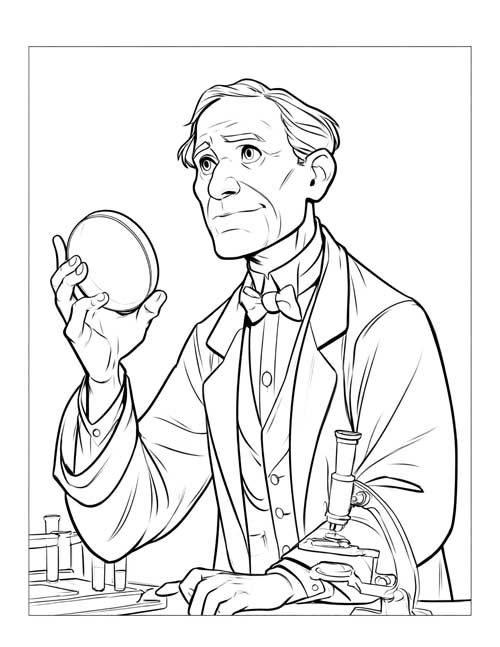
Alexander Fleming was a Scottish doctor and scientist who studied bacteria. In 1928 he noticed that a mold growing on one of his dishes had killed the bacteria around it, and the germ-killing substance it made was penicillin.
Other scientists turned it into a medicine in the 1940s, and Fleming shared the Nobel Prize in 1945 with Howard Florey and Ernst Chain. Penicillin was the first antibiotic and has saved millions of lives.
Robert Goddard, Rocket Scientist

Robert Goddard was a physics professor who spent his life trying to prove that a rocket could fly to space. He got the idea as a teenager in 1899, when he climbed a cherry tree and imagined a machine that could reach Mars. He enjoyed the daydream so much that he marked the date as his own private anniversary every year after.
Goddard worked out that a rocket doesn’t push against the air. It pushes against its own exhaust, which is why it works just as well in the emptiness of space. He tested different fuels until he settled on gasoline and liquid oxygen, and in 1926 his first rocket using them lifted off from a farm field. Later he moved to New Mexico, where his rockets got bigger, flew faster than the speed of sound and were steered by gyroscopes. He ended up with more than 200 patents, and the rocket builders who came after him used many of his ideas.
History of Space coloring pages
Jane Goodall
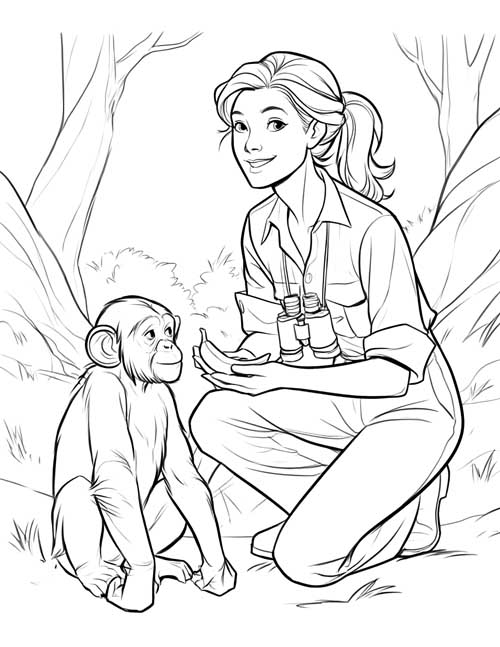
Jane Goodall loved animals from childhood. In 1960, at the age of 26, she went to Gombe in Tanzania to study wild chimpanzees. She watched them strip the leaves off twigs and use them to fish termites out of their mounds, which surprised scientists who thought only humans made tools.
She gave the chimps names instead of numbers and showed that they have personalities and feelings. She spent the rest of her life working to protect wildlife, until she died in 2025 at the age of 91.
Katherine Johnson
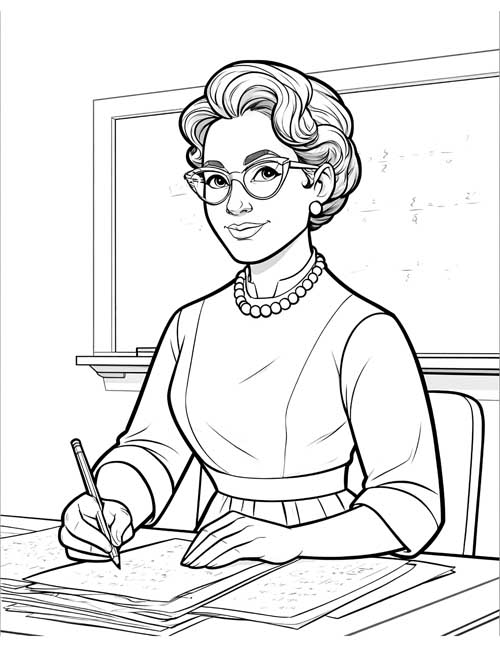
Katherine Johnson was a mathematician at NASA who did flight calculations by hand. Her math helped plot the path of Alan Shepard's 1961 flight, the first American in space, and she worked on the Apollo missions to the Moon.
Before John Glenn orbited the Earth in 1962, he asked her to double-check the numbers from the new electronic computers, and he trusted the flight once she had. She received the Presidential Medal of Freedom in 2015.
Houston, We’ve Had a Problem
In April 1970, Apollo 13 was on its way to the Moon when, almost 56 hours into the trip, an oxygen tank blew up with a loud bang. Astronaut Jack Swigert radioed, “Okay, Houston, we’ve had a problem here,” and commander Jim Lovell said it again a moment later. The Moon landing was off, and the only job left was getting three astronauts home alive.
The crew used the little lunar lander as a lifeboat, but it was built for two people for two days, not three people for four, so the air slowly filled up with the carbon dioxide they breathed out. The spare filters were square and the holes were round! Engineers and scientists on the ground worked out a fix using only things the astronauts already had with them, like plastic bags, cardboard and duct tape, and read the steps over the radio one at a time.


History of Space Travel coloring pages
Non-Scientists Who Contributed to Science
These three are best known as an artist, a printer and a nurse, but each of them changed how science was done.
Leonardo da Vinci


Leonardo filled thousands of pages of notebooks with drawings and notes. He studied how birds fly, how water swirls and how the body is built, and he drew muscles, bones and organs after studying human bodies so that his paintings would be accurate.
He also sketched flying machines, a parachute and bridges. Almost none of his inventions were built in his lifetime, but the notebooks show how closely he looked at the world.
Benjamin Franklin
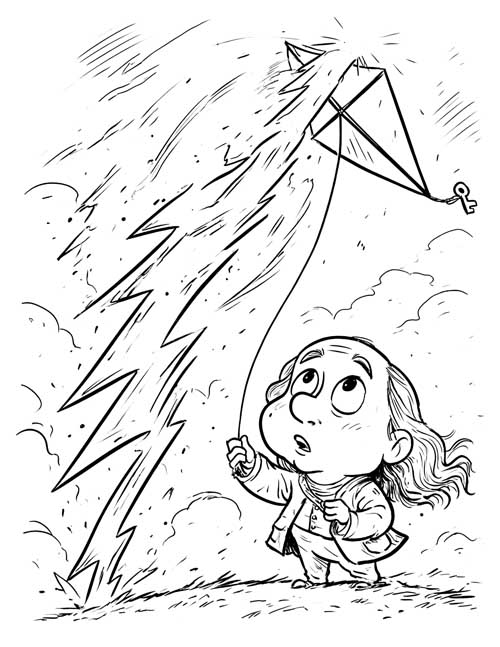
Franklin was a printer by trade, but he was fascinated by electricity. He showed that lightning is a form of electricity and invented the lightning rod, which carries a strike safely down the side of a building. He also came up with words we still use, like battery, positive and negative.
He drew one of the first maps of the Gulf Stream, the warm ocean current that crosses the Atlantic, and he invented bifocal glasses and a more efficient iron stove.
Benjamin Franklin coloring pages
Florence Nightingale

Florence Nightingale is famous as a nurse, but she was also very good with numbers. After the Crimean War she made a chart that showed more soldiers had died from disease than from their wounds, and she used it to convince leaders to improve hospital conditions.
It was one of the first uses of a statistical diagram to persuade people, and in 1858 she became the first woman elected to the Royal Statistical Society. She also started a nursing school in London in 1860.
Historical People coloring pages >