Egyptian goddess Isis
In many hieroglyphic drawings, Isis wears a throne on her head instead of a crown, and that's on purpose. Her name actually means "throne," and Egyptians saw her as the power behind the pharaoh's seat, the one who made a king a king.
Isis with the Ankh
The ankh (also known as the key of life) is the Egyptian symbol for life, and Isis is often drawn with one in her hand. As the goddess of magic and motherhood, Isis was the ultimate giver of life and was also considered a powerful healer, so the ankh is one of her symbols. It's a simple shape, so it's a fun spot to get bold with color, try a solid gold or a bright turquoise so it really pops against her robes.


Isis with Wings
Isis is often shown with her wings stretched wide or wrapped protectively around Osiris or her baby son Horus. All those feathers are a great excuse to play with color, try shading in bands the way real temple paintings do, or make up your own pattern entirely.


Isis in Hieroglyphs
Ancient artists drew their gods and goddesses from the side, flat against the wall, and that style shows up on tomb paintings and papyrus alike. For an authentic look, stick to the colors they actually used: gold, deep red, turquoise, and black outlines.


Isis and Osiris
Isis's most famous story is the one where she brings her husband Osiris back from the dead, piece by piece. It's a tale of grief, magic and devotion that shaped how Egyptians thought about the afterlife for thousands of years.
More Isis Coloring Pages
A few more Isis pages to print, perfect for extras in a classroom or just a quiet afternoon with crayons.


The Story of Isis and Osiris
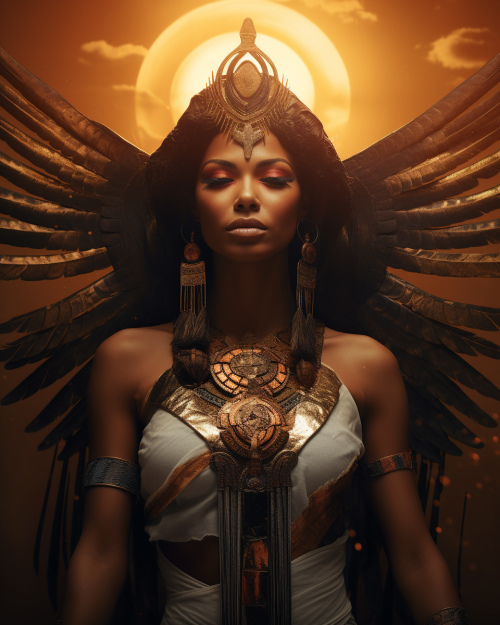
Isis was married to her brother Osiris, the king of Egypt, and by most accounts the two of them were genuinely happy together. That changed when their jealous brother Set murdered Osiris, cut his body into pieces and scattered them up and down the Nile so no one could ever put him back together.
Isis refused to accept that. She turned herself into a kite, a hawk-like bird, and searched the riverbanks with her sister Nephthys until she'd found every missing piece. Using spells she'd learned from the god Thoth, she stitched Osiris back together well enough to bring him briefly back to life, just long enough for the two of them to conceive their son, Horus.
Osiris couldn't stay among the living after that, so he became ruler of the underworld instead, judging the souls of the dead. Isis raised Horus in hiding, keeping him safe from Set until he was old enough to fight for his father's throne himself. Ancient writers said Isis's tears for Osiris were what caused the Nile to flood each year, which is how she came to be seen as the goddess who waters Egypt's fields.
People worshipped Isis for over 3,000 years, and her following eventually spread far past Egypt's borders, all the way to Rome, where temples to her were still being built long after the pyramids were already ancient history. Not many Egyptian gods traveled that far from home.
Mythology of the Egyptian goddess, Isis:
In the realm of ancient Egypt, the goddess Isis held a central place in the mythological tapestry, known for her wisdom, magic, and unwavering devotion. One of the most enduring tales featuring Isis revolves around the tragic fate of her husband and brother, Osiris.
Osiris, the revered king of Egypt, fell victim to the treachery of their jealous brother Set. Set conspired to murder Osiris, dismembering his body and scattering the pieces across the land. Devastated by grief, Isis embarked on a perilous quest to retrieve the scattered parts of Osiris and restore him to life.
With her magical prowess and unwavering determination, Isis traveled far and wide, recovering each piece of Osiris's body. As she gathered the fragments, she carefully reassembled them, using her profound knowledge of ancient spells and incantations. The goddess spared no effort, and her love for Osiris fueled her resolve.
Once the reassembly was complete, Isis, with tears of joy and heartfelt prayers, breathed life back into Osiris. Through her incredible magical abilities and the deep bond they shared, Osiris was resurrected, albeit as the ruler of the underworld.
The triumphant resurrection of Osiris symbolized the cyclical nature of life, death, and rebirth in Egyptian mythology. Isis, as the devoted wife and wise goddess, became a revered figure associated with resurrection, motherhood, and the enduring power of love. The tale of Isis and Osiris stands as a testament to the eternal themes of life, death, and the transformative magic woven into the fabric of ancient Egyptian beliefs.